Weather & safety · 11 min read
Hot-weather hiking: how heat changes your route plan
Plan hot-weather hikes around exposure, humidity, effort, water and turnaround options rather than treating a temperature forecast as the whole story.
The useful takeaway
Heat changes the route: shorten, slow down, seek shade, protect water margin and turn back before the group is committed beyond its capacity.
Heat is more than the number in the forecast
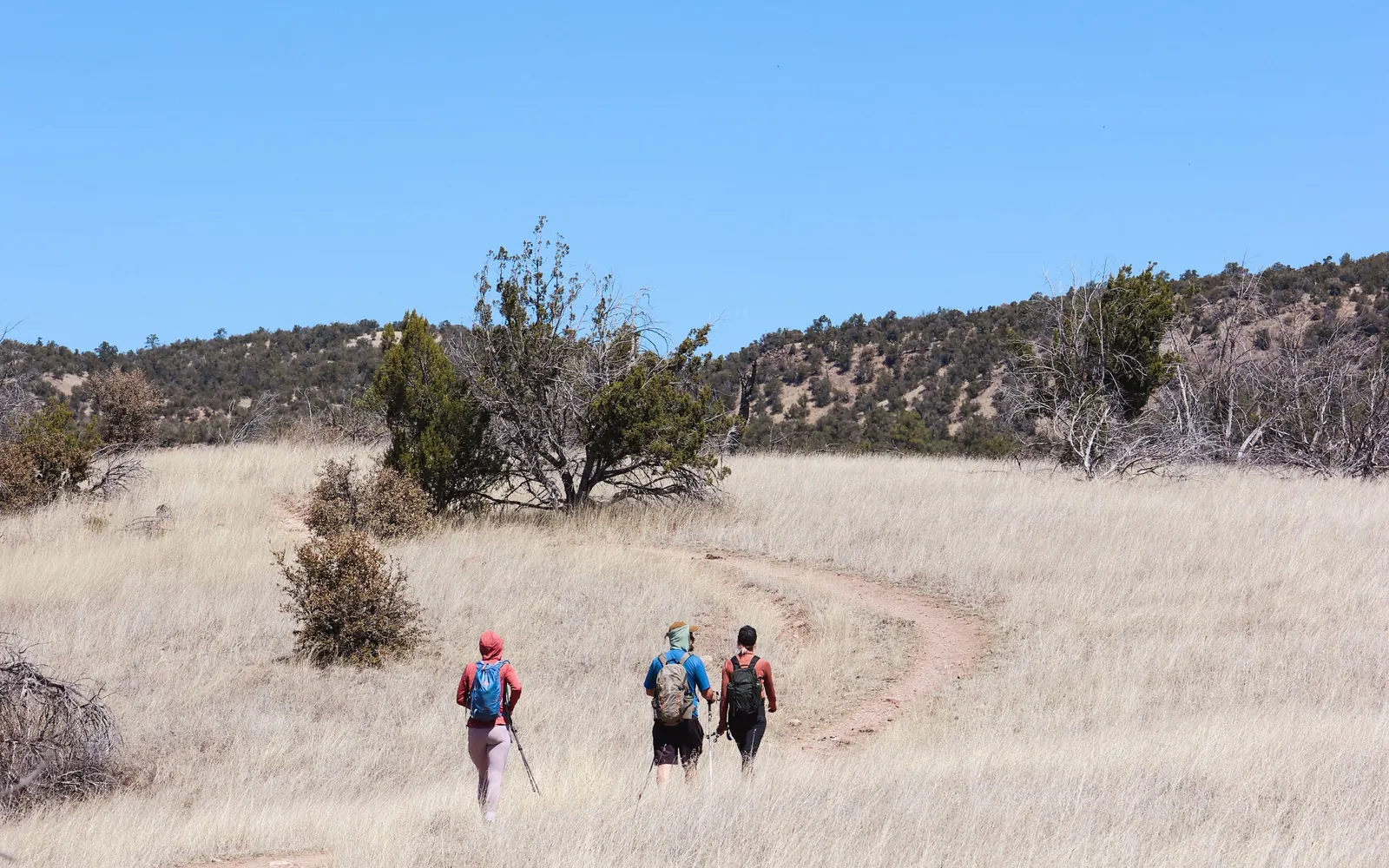
A temperature forecast does not describe the full load of a hot hike. Direct sun, humidity, lack of shade, steep climbing, altitude, pack weight, route duration and the group’s pace all affect how hard it is to cool down. The National Park Service notes that high humidity slows sweat evaporation and strenuous activity can make cooling more difficult. A short exposed climb with no water may demand more caution than a longer, shaded walk near a reliable exit.
Read the route with those factors in mind. Where is the sun likely to be during the climb and return? How much of the trail has shade? Is water actually available, reliable and suitable for your plan? Is there a shorter loop, a lower-elevation alternative or a point where the group can turn around without creating a longer exposed walk out? Current park alerts and local weather information can add context that a generic forecast does not capture.
Make a plan that leaves heat margin
Choose the route, timing and effort level together. Starting in a cooler part of the day can reduce exposure where it fits local conditions, but it does not turn a demanding route into an easy one. Select a shorter or less strenuous hike when heat, humidity or sun makes the original plan less forgiving. Begin at a sustainable pace, take breaks and use available shade to rest before the group is depleted. The goal is a calm day with options, not proving that the planned distance can still be completed.
Plan water around the specific route and uncertainty, not a universal litres-per-hour formula. Identify the longest credible dry stretch, bring capacity for it and confirm whether any natural or managed source is available on the day. Drink regularly according to your needs and conditions; official guidance advises bringing enough water for the activity and drinking before thirst becomes the only signal. Food and electrolytes are individual and context-dependent; do not turn them into a rigid supplement prescription. Use the water-planning and water-treatment guides to build the route-specific system.
- Check forecast, local heat alerts and trail or park conditions close to departure.
- Choose a route with realistic shade, water and exit options for the day.
- Adjust pace and rest in shade before the group is struggling.
- Wear sun protection and carry clothing suitable for both sun and changing conditions.
Use simple observations to change course early
Heat decisions should happen during the hike, not only before it. Slow pace, missing planned shade, unexpectedly warm rock, empty water margin or a group member who cannot recover at rest are reasons to reassess. Turnaround is not a failure of the itinerary; it is a route-management choice that preserves options. The NPS explicitly recommends putting a backup plan into action or turning around when it becomes too hot for the planned activity.
Pay attention to general official warning signs such as unusual heavy sweating, dizziness, headache, weakness, nausea, shortness of breath or muscle cramps. These signs do not diagnose a condition and can have other causes, but they are a reason to stop exertion, move to a cooler or shaded place and reassess the plan. Keep the group together and do not leave someone to push through alone. If symptoms are severe, worsening or involve confusion, altered awareness, fainting or seizure, seek urgent emergency or medical help where available.
Prepare for the route you have, not an idealised hiker
Experience, acclimatisation, health circumstances and recent time in the heat vary. CDC guidance notes that anyone can be affected and that some people face higher risk; this guide cannot make an individual medical assessment. If you have a condition, medication or personal circumstance that changes heat planning, seek appropriate professional advice before treating a demanding hot-weather route as routine.
Clothing and equipment can support the plan without becoming a product checklist. Lightweight, sun-protective clothing, a hat, sunscreen and the ability to rest in shade may all be useful, but they do not cancel the effect of exposure and exertion. Keep the day flexible, use BuddiePack only to understand the carry trade-offs, and choose a cooler, shorter or more shaded alternative when the facts do not support the original objective. A good hot-weather plan is one the group can still change.
Turn the topic into a practical decision
Hot-weather planning is the decision to keep heat load, route exposure, water and group recovery within a margin that still allows an early exit. The useful habit is to make that decision before the route starts demanding attention. Write down what you expect, what evidence supports that expectation and what would make you change course. A guide becomes valuable when it helps you notice the moment when the original assumption no longer matches reality.
Use route-specific facts rather than identity or confidence. Experience matters, but it does not cancel weather, terrain, daylight, equipment limits or a group member having a different day than expected. Build a plan that can absorb one ordinary problem without immediately becoming urgent. If the plan only works when pace, conditions and equipment all perform perfectly, reduce the objective or increase the margin.
For repeat use, keep the decision simple enough to apply under fatigue. A short written rule is better than a vague intention: identify the trigger, the safe response and the latest point where that response remains easy. That approach also makes group communication clearer because everyone knows what would cause a pause, a change of route or a turnaround.
- Check heat alerts, temperature, humidity, sun exposure and route shade.
- Move strenuous sections to cooler periods only when daylight and local conditions support that plan.
- Choose a shorter or lower route when the original objective leaves little heat margin.
- Map dependable water and carry capacity for dry sections.
- Use sun protection and clothing appropriate to exposure.
- Know the group’s personal risk factors without turning general guidance into medical clearance.
Reassess while the hike is happening
Pre-trip planning is only the first pass. Once moving, compare the actual day with the assumptions you made at home. Conditions, pace, energy, water, visibility, surface and group confidence are live data. Small deviations are normal; several deviations pointing in the same direction deserve action before they compound.
Heat problems often announce themselves through declining pace and recovery before a dramatic emergency appears. The strongest signal is often a trend rather than one dramatic event: breaks getting longer, navigation taking more time, layers staying wet, feet becoming progressively sore or the group reaching checkpoints later than planned. Use those trends to protect the later part of the route rather than spending all available margin early.
At major junctions, before exposed sections and before committing to a long return with fewer exits, stop for a deliberate check. Ask whether the route still fits the group, whether the weather window still exists and whether food, water, warmth, daylight and concentration are adequate for the next segment as well as the return.
- Rest in shade before the group is depleted.
- Compare water use with the plan at fixed checkpoints.
- Treat dizziness, unusual weakness, headache, nausea or poor recovery as reasons to stop and reassess.
- Turn around when the return exposure is becoming harder than expected.
- Keep the group together and do not pressure a struggling person to maintain pace.
- Seek urgent help for severe or worsening symptoms, especially altered mental status, collapse or seizure.
Worked scenarios to practise the judgment
Scenario 1: An exposed climb is taking thirty minutes longer than planned and water use is already above the expected rate. The point is not to memorise one answer for every future hike. Identify which variable changed, what information would confirm it and which option preserves the most margin. Practising that reasoning before a real problem makes it easier to act calmly rather than defend the original plan because of time already invested.
Scenario 2: Humidity is much higher than forecast and sweat is not providing the cooling you expected. The point is not to memorise one answer for every future hike. Identify which variable changed, what information would confirm it and which option preserves the most margin. Practising that reasoning before a real problem makes it easier to act calmly rather than defend the original plan because of time already invested.
Scenario 3: A shaded route is available nearby but the group has travelled specifically for the hotter summit objective. The point is not to memorise one answer for every future hike. Identify which variable changed, what information would confirm it and which option preserves the most margin. Practising that reasoning before a real problem makes it easier to act calmly rather than defend the original plan because of time already invested.
Scenario 4: A hiker feels better after a shaded rest but symptoms return soon after restarting. The point is not to memorise one answer for every future hike. Identify which variable changed, what information would confirm it and which option preserves the most margin. Practising that reasoning before a real problem makes it easier to act calmly rather than defend the original plan because of time already invested.
Common mistakes and better alternatives
Most mistakes around this topic are not caused by a complete absence of knowledge. They happen when one useful rule is applied too broadly, when a warning sign is noticed but postponed, or when the group continues because changing the plan feels inconvenient. Replace rigid rules with a repeatable process: observe, compare with the plan, decide while several safe options remain, and communicate the change clearly.
After the hike, review the mismatch between expectation and reality. Record what was useful, what was unnecessary, which assumption failed and what you would change next time. That turns one day outside into calibration for future route choices instead of relying on memory or copying someone else’s system.
- Using a single temperature threshold for every route and person.
- Counting an uncertain spring as guaranteed heat-safety capacity.
- Waiting until thirst is extreme before reviewing the plan.
- Interpreting determination as evidence that someone can safely continue.
- Choosing dark exposed rock or canyon terrain without considering radiant heat and limited escape.
- Treating electrolytes or supplements as a substitute for route and exposure management.
Quick-reference questions
Use these questions as a compact review before a similar trip. They are deliberately practical rather than exhaustive. Local rules, current official information and individual medical or technical needs always take priority over a general guide.
- Question: How much water do I need in heat? Answer: Plan from route, dry interval, conditions and individual needs rather than a universal rate.
- Question: Is an early start always enough? Answer: No; the route still needs to clear exposed sections before the realistic heat or storm window.
- Question: What symptoms matter? Answer: Any unusual heat-related deterioration deserves a pause; severe neurological symptoms or collapse require urgent emergency response.
- Question: Should I push through cramps or headache? Answer: Stop exertion, cool down, reassess and seek appropriate help if symptoms are severe or persist.
- Question: Who is at higher risk? Answer: Risk varies with health, medication, acclimatisation and other factors; use professional advice for individual medical questions.
Sources & further reading
These sources informed the planning guidance in this guide. Check official local information for your specific trail and conditions.
- Beat the Heat: Prevent Heat-Related Illnesses
National Park Service — heat-risk factors, route planning, water needs, shade and turnaround decisions
- About Heat and Your Health
Centers for Disease Control and Prevention — heat-risk planning, hydration, shade, breaks and general warning signs
- Hiking Safety — Mount Rainier National Park
National Park Service — hot-weather pacing, rest, sun protection, local alerts and emergency escalation
- Heat-related Illnesses
Centers for Disease Control and Prevention — serious heat-illness warning signs and emergency escalation